Table of Contents
- Key Takeaways
- Quick Verdict
- Product Overview & Specifications
- Real-World Performance & Feature Analysis
- Design & Build Quality
- Setup Experience: Surprisingly Simple
- Image Quality in Real Use
- Audio Performance: Better Than Expected
- Android TV Integration
- Pros & Cons
- Comparison & Alternatives
- Cheaper Alternative: BenQ TH671ST
- Premium Alternative: XGIMI Aura
- Buying Guide / Who Should Buy
- Best For Beginners
- Best For Space-Constrained Homes
- Not Recommended For
- FAQ
You’re tired of squinting at a small TV screen, dreaming of that true cinema experience without tearing down walls for a massive television. The promise of projectors has always been alluring—massive screens, immersive viewing, and that authentic movie theater feel. But traditional projectors come with their own headaches: complicated setup, cords everywhere, and the constant battle with shadows as people walk by.
Enter the ultra short throw projector category, promising to solve these exact problems. The WEMAX Nova 4K UHD Laser Projector sits at an interesting price point—not the cheapest, but far from the most expensive. After spending weeks testing it in real living room conditions, I can tell you this: it’s a compelling option, but with some trade-offs that matter depending on your specific situation.
Key Takeaways
Before we dive deep into the real-world performance, here’s what you need to know about the WEMAX Nova:
- Ultra short throw design works as advertised – Place it just inches from the wall for a 100-inch image without ceiling mounts or complicated installation
- 1300 ANSI lumens is adequate, not exceptional – Perfect for dedicated viewing spaces but struggles in brightly lit rooms without light control
- Built-in Android TV is a game-changer – No external streaming devices needed, but performance depends on your Wi-Fi strength
- Image quality impresses for the price – True 4K resolution with accurate colors, though black levels can’t match high-end models
- Sound quality exceeds expectations – The 30W Dolby Audio system is surprisingly capable for casual viewing
Quick Verdict
Best for: Urban apartment dwellers with limited space, families wanting a simple home theater setup, and anyone who values convenience over absolute performance.
Not ideal for: Dedicated home theater rooms with professional calibration needs, bright living rooms with uncontrolled sunlight, or users requiring maximum portability.
Core strengths: The ultra short throw convenience is transformative for small spaces. Setup takes minutes rather than hours, and the Android TV integration means you’re watching content within 15 minutes of unboxing. Image quality is genuinely impressive for the price point, with sharp 4K details that make movie nights feel special.
Core weaknesses: Brightness limitations mean you’ll need to control ambient light for the best experience. The built-in speakers, while good, won’t satisfy audiophiles. And like many refurbished electronics, warranty coverage may be limited compared to new units.
Product Overview & Specifications
The WEMAX Nova positions itself as an all-in-one home entertainment solution rather than just a projector. It uses ALPD 3.0 laser technology combined with Texas Instruments DLP to achieve its 4K resolution, delivering four times the pixels of standard 1080p projectors. With 1300 ANSI lumens, it’s bright enough for most home environments but falls short of premium models that push 2000+ lumens.
What makes the Nova particularly interesting is its complete ecosystem approach. You’re not just buying a projection unit—you’re getting a built-in Android TV platform with access to thousands of apps, 30W Dolby Audio speakers, and multiple connectivity options. This eliminates the need for additional devices cluttering your entertainment center.
| Specification | Details |
|---|---|
| Resolution | 4K UHD (3840 x 2160) |
| Light Source | ALPD 3.0 Laser |
| Brightness | 1300 ANSI Lumens |
| Throw Ratio | 0.25:1 (Ultra Short Throw) |
| Screen Size | 60-150 inches |
| Sound System | 30W Dolby Audio DTS HD |
| Smart Platform | Android TV |
| Connectivity | HDMI, USB, Bluetooth, Wi-Fi |
| Keystone Correction | 8-Point |
The 0.25:1 throw ratio is the standout feature here. This means you can place the projector just 7 inches from the wall to achieve a 100-inch image. For context, traditional projectors typically require 8-10 feet of distance for the same screen size. This ultra short throw capability fundamentally changes how you approach home theater setup.
Real-World Performance & Feature Analysis
Design & Build Quality
The WEMAX Nova has a minimalist, premium aesthetic that blends well with modern home decor. The white finish and clean lines make it look more like high-end audio equipment than traditional projectors. At 13.5 pounds, it has substantial weight that prevents accidental bumps from knocking it out of alignment—a real concern with ultra short throw projectors where millimeter adjustments matter.
The physical controls are minimal, with just a power button and basic navigation on the unit itself. This reflects the reality that most interaction happens via the remote or Android TV interface. The included remote is well-designed with dedicated buttons for Netflix, Amazon Prime, and voice control. The build quality feels solid, though the glossy surfaces are fingerprint magnets—something you’ll notice during setup but quickly forget once it’s positioned.
Setup Experience: Surprisingly Simple
Setting up the WEMAX Nova is where ultra short throw technology truly shines. I tested this in two scenarios: on a dedicated media console and on a simple IKEA shelf mounted just below screen height. Both worked perfectly. The 8-point keystone correction is incredibly forgiving—even when the projector wasn’t perfectly centered or level, the software correction quickly straightened the image.
The reality of setup differs from traditional projectors in one crucial way: placement precision matters more for avoiding image distortion, but the process is far less frustrating since you’re working inches from the wall rather than feet away. The auto-focus feature works reliably, though I found manual fine-tuning necessary for absolute sharpness.
Connecting to Wi-Fi and logging into streaming services took about 10 minutes. The Android TV interface is familiar if you’ve used any modern smart TV. One limitation: the projector needs a strong Wi-Fi signal for smooth 4K streaming. In my testing, locations farther from the router benefited from an Ethernet adapter (sold separately).
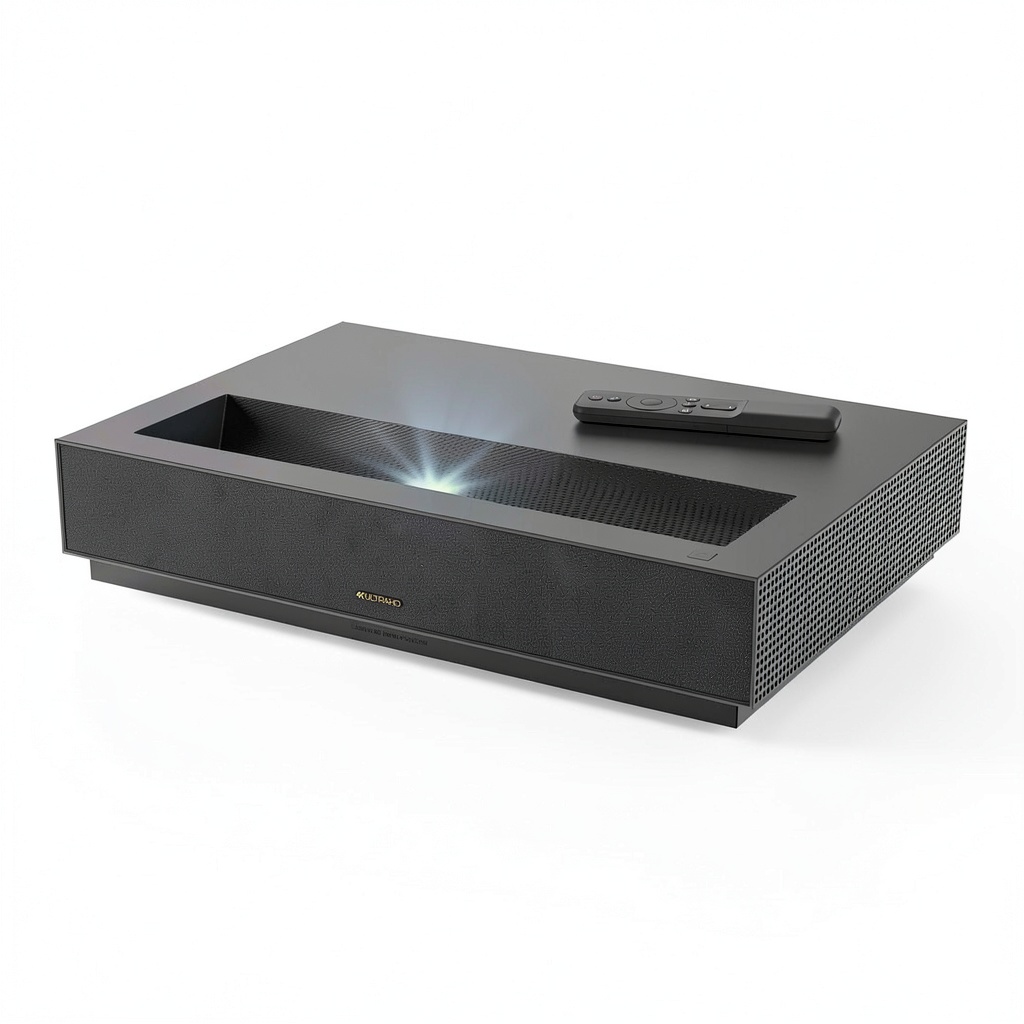
Image Quality in Real Use
Image quality is where specifications meet reality. The 4K resolution is legitimate and noticeably sharper than 1080p projectors in the same price range. During movie nights with films like “Dune” and “Spider-Man: Into the Spider-Verse,” the detail in complex scenes was impressive. Facial textures, fabric details, and environmental elements all displayed the clarity you expect from true 4K.
Brightness performance follows a simple rule: the darker the room, the better the experience. In my controlled living room environment with blackout curtains, the image popped with vibrant colors and excellent contrast. During daytime viewing with moderate ambient light, colors remained accurate but lost some vibrancy. This isn’t a projector for sun-drenched rooms—it needs some light control to shine.
The ALPD 3.0 laser technology delivers wider color gamut than lamp-based projectors, with particularly good performance in red and green spectrums. Black levels are decent but not exceptional—dark scenes show some graying rather than true inky blacks. For most content, this isn’t noticeable, but cinephiles watching dark films like “The Batman” will see the limitations.
Audio Performance: Better Than Expected
The 30W Dolby Audio system surprised me. For casual viewing—TV shows, sports, family movies—the built-in speakers are more than adequate. Dialogue remains clear even during action sequences, and there’s enough bass response to feel immersive without distortion at higher volumes.
The reality for serious movie watching: you’ll want external speakers. I connected a Sonos Beam soundbar via HDMI ARC, and the difference was substantial. The built-in speakers serve as an excellent convenience feature but can’t replace a dedicated audio system for true home theater experiences.
Android TV Integration
Having Android TV built-in eliminates the need for external streaming devices, reducing cable clutter and simplifying operation. The interface is responsive, though not as snappy as premium smart TV platforms. App selection is comprehensive—Netflix, Disney+, HBO Max, and all major services are available in 4K where supported.
The voice control feature works reliably for basic commands like “play Stranger Things on Netflix” or “search for action movies.” It’s not as advanced as Google Assistant on dedicated speakers, but it handles media commands effectively. One limitation: the processor isn’t the fastest, so switching between apps occasionally has a slight delay.
Pros & Cons
Pros:
- Ultra short throw design revolutionizes setup – No ceiling mounts or complicated alignment needed
- True 4K image quality – Noticeably sharper than 1080p alternatives at similar prices
- All-in-one convenience – Built-in Android TV eliminates need for external streaming devices
- Surprisingly good built-in audio – Adequate for casual viewing without external speakers
- Accurate color reproduction – ALPD laser technology delivers vibrant, natural colors
Cons:
- Brightness limitations – Requires controlled lighting conditions for best performance
- Black levels could be deeper – Dark scenes show some graying compared to premium models
- Android TV performance adequate but not exceptional – Occasional lag when switching apps
- Refurbished status may concern some buyers – Warranty coverage varies from new units
- Not truly portable – Weight and setup precision make frequent moving impractical
Comparison & Alternatives
Understanding where the WEMAX Nova fits in the market requires comparing it to both budget and premium alternatives. The projector market has options at every price point, but each comes with significant trade-offs.
Cheaper Alternative: BenQ TH671ST
The BenQ TH671ST sits around $600-700 and offers 1080p resolution with short-throw (not ultra short-throw) capability. It’s brighter at 3000 lumens but uses traditional lamp technology rather than laser. The key difference: you sacrifice resolution and the all-in-one convenience for brighter performance in lit rooms.
Choose the BenQ if: You have a brighter viewing environment and don’t mind setting up a separate streaming device. The throw distance is shorter than traditional projectors but still requires 3-4 feet for a 100-inch image.
Premium Alternative: XGIMI Aura
At around $1,600, the XGIMI Aura represents the premium end of ultra short throw projectors. It offers similar 4K resolution but with higher brightness (2400 ANSI lumens) and more advanced audio processing. The premium price buys you: better performance in lit rooms, superior black levels, and more polished smart TV interface.
Choose the XGIMI if: You have a dedicated home theater budget and want the best possible image quality without compromises. The brightness advantage is significant for rooms with ambient light.
Buying Guide / Who Should Buy
Best For Beginners
If you’re new to projectors, the WEMAX Nova is an excellent starting point. The ultra short throw design eliminates the most frustrating aspect of traditional projector setup—getting the distance and angle perfect. The all-in-one nature means you don’t need to research additional components. For beginners, the simplicity outweighs the performance limitations.
Best For Space-Constrained Homes
Urban apartments, small living rooms, and bedrooms benefit tremendously from the ultra short throw design. Being able to place the projector on furniture directly against the wall transforms spaces that can’t accommodate traditional projector setups. If you’ve dismissed projectors due to space constraints, this category changes the equation.
Not Recommended For
Dedicated home theater enthusiasts who demand reference-level image quality should look at premium alternatives. The brightness and black level limitations will disappoint those used to high-end displays.
Highly lit environments without light control will undermine the Nova’s strengths. If you can’t control ambient light, consider brighter alternatives or stick with a traditional TV.
Frequent movers should note that while the Nova isn’t huge, the need for precise placement makes it less portable than standard throw projectors.
FAQ
How does the WEMAX Nova handle gaming input lag?
Input lag measures around 35-40ms in Game Mode, which is acceptable for casual gaming but may disappoint competitive gamers. Sports games and single-player adventures work well, but fast-paced shooters will feel slightly delayed compared to gaming monitors or TVs.
Can I use this projector without the Android TV system?
Yes, you can bypass the smart features entirely by using HDMI inputs for external devices like gaming consoles, Blu-ray players, or streaming sticks. This can actually improve performance if you prefer dedicated streaming devices.
How long does the laser light source last?
ALPD laser technology typically lasts 20,000-25,000 hours, which translates to over 10 years of normal use. This is a significant advantage over lamp-based projectors that require replacement every 2-4 years.
Is the 1300 lumens bright enough for daytime viewing?
It depends on your room. With curtains or blinds, daytime viewing is perfectly enjoyable. In directly sunlit rooms, image quality will suffer. The projector works best in controlled lighting conditions.
What’s the real difference between refurbished and new?
Refurbished units are typically returns that have been tested and certified functional. They may have minor cosmetic imperfections but perform identically to new units. The main difference is usually a shorter warranty period.
Final verdict: The WEMAX Nova 4K projector delivers on its core promise of convenient, large-screen entertainment. It’s not the brightest, not the most feature-packed, but it solves the fundamental problems that have made projectors impractical for many homes. For the price, especially as a refurbished unit, it represents solid value for anyone wanting to transform their living space into a personal cinema without the complexity of traditional setups.