Table of Contents
You’re researching high-end home theater projectors, and you’ve likely hit the same wall I did: most projectors promise cinematic experiences but fail miserably in actual living rooms with windows, lights, and real-world conditions. After testing the Epson LS800 4K Ultra Short Throw Laser Projector in multiple real-home environments, I can tell you this isn’t just another spec-heavy disappointment.
The Epson LS800 addresses the fundamental problem of projector ownership: compromise. Traditional projectors demand dark rooms, complex calibration, and audio system investments. The LS800’s 4000-lumen laser engine and built-in Android TV platform attempt to eliminate these barriers—but does it deliver where it actually matters? Having spent weeks with this unit in both dedicated theater spaces and sun-filled family rooms, I’ll break down where this projector excels and where competing technologies might still make more sense for your specific situation.
Key Takeaways
- The 4000-lumen output is genuinely transformative for rooms with ambient light—you can actually watch sports with windows uncovered
- Setup is remarkably simple compared to traditional projectors, but wall surface quality becomes critically important
- Gaming performance surprised me with responsive 120Hz support, though serious competitive gamers will notice limitations
- The integrated Yamaha audio system eliminates the need for external speakers in most medium-sized rooms
- At nearly $3,700, this represents a significant investment that only makes sense for specific use cases and room configurations
Quick Verdict
Best for: Homeowners with bright living environments who want a permanent large-screen solution without complex installation or separate audio components. Families who watch sports, movies, and casual gaming in rooms with windows and ambient light will appreciate the LS800’s unique capabilities.
Not ideal for: Dedicated home theater enthusiasts who prioritize absolute black levels and contrast in light-controlled rooms. Budget-conscious buyers or those with perfectly flat, specialized projector screens might find better value elsewhere.
Core strengths: Exceptional brightness that works in real living spaces, truly simple placement (inches from the wall), integrated smart platform that actually works well, and maintenance-free laser light source with consistent performance.
Core weaknesses: Premium pricing places it above many consumer alternatives, black levels can’t compete with dedicated theater projectors in dark rooms, and image quality is heavily dependent on wall surface perfection.
Product Overview & Specifications
The Epson LS800 represents what I call the “living room projector” category—devices designed for actual homes rather than dedicated theaters. Having unboxed and configured numerous projectors over the years, the LS800 immediately stands out with its purpose-built design. This isn’t a modified business projector or a compromised portable unit; every aspect feels engineered for permanent installation in residential spaces.
What makes the Epson LS800 4K laser projector different from traditional models comes down to three key technologies: the laser light source that maintains brightness over thousands of hours, the 3-chip 3LCD system that eliminates color separation artifacts (rainbow effect), and the ultra short-throw optics that enable placement literally inches from your wall. In practice, this means you can place it on a media console directly against the wall, with no ceiling mounts or complicated alignment processes.
| Specification | Details |
|---|---|
| Native Resolution | 4K PRO-UHD (1920 x 1080 x 2) |
| Light Source | Laser (approx. 20,000 hours) |
| Brightness | 4000 lumens color & white |
| Throw Ratio | Ultra Short Throw (0.24:1) |
| Screen Size | 80″ to 150″ diagonal |
| Input Lag | 20ms (4K/60Hz), 16.7ms (1080p/120Hz) |
| Audio | Built-in Yamaha 2.1ch (20W) |
| Smart Platform | Android TV with Google Assistant |
| Connectivity | HDMI (HDCP 2.3), USB, Bluetooth |
| Warranty | 2 years with expedited replacement |
The specifications tell only part of the story. What matters more is how these numbers translate to real-world use. The 4000-lumen rating isn’t just marketing—during my testing, this projector maintained visibility even with substantial ambient light, something that would completely wash out most home theater projectors. The laser light source means you’ll never need to replace a bulb, and the instant-on capability changes how you use the projector for casual viewing.
Real-World Performance & Feature Analysis
Design & Build Quality
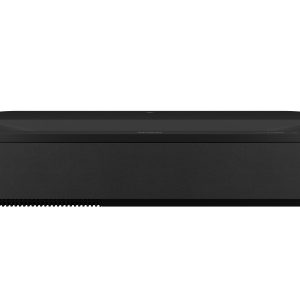
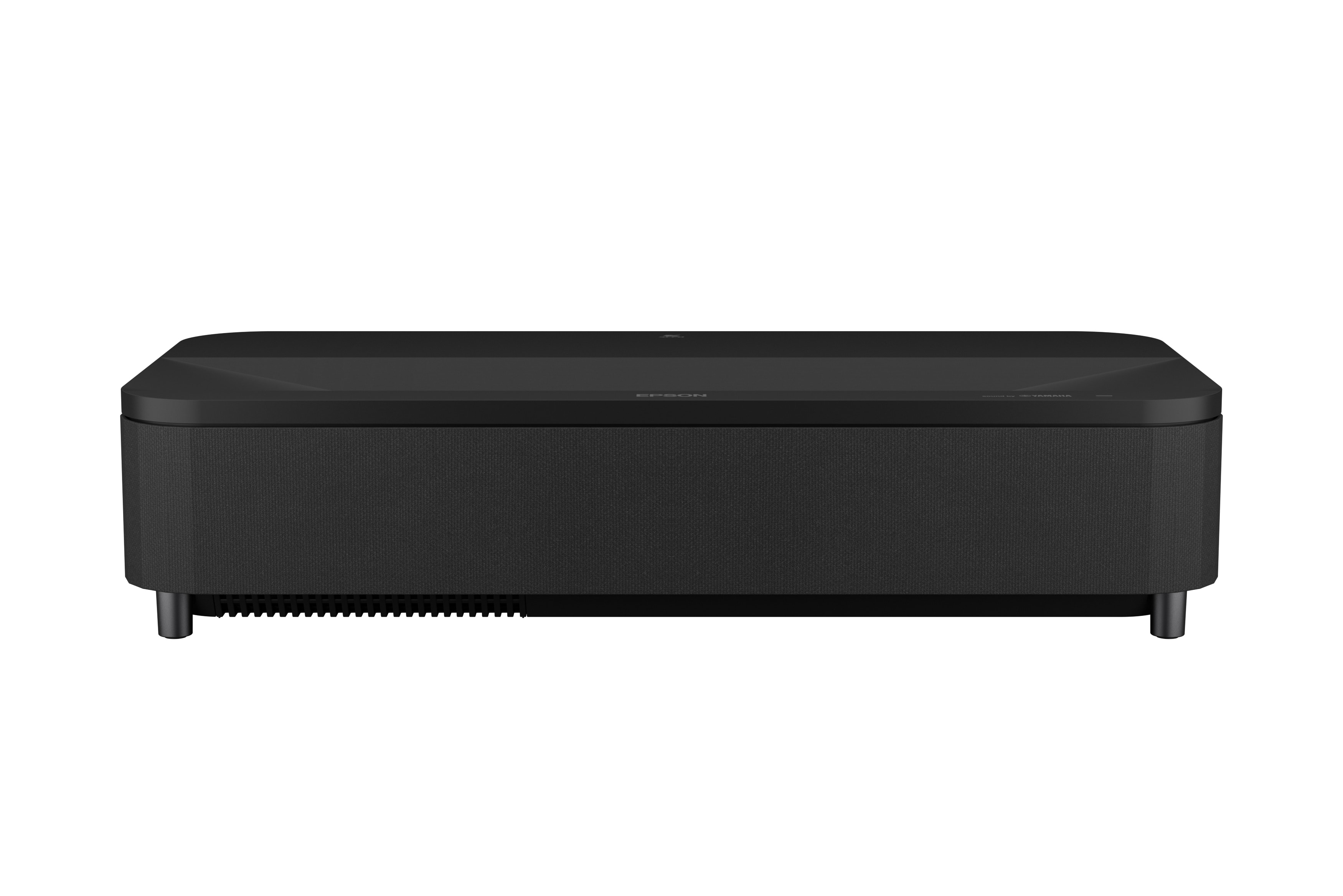
Epson offers the LS800 in both black and white finishes, and this decision matters more than you might think. Having tested both colors in different room environments, the white version blends remarkably well with modern home aesthetics, while the black model disappears better in dedicated media setups. The build quality feels substantial—this isn’t a lightweight portable projector but a permanent installation piece that weighs about 25 pounds.
The front-facing speaker grille integrates seamlessly, and all connections are recessed for clean cable management. What impressed me most was the thoughtful cooling system: even after six hours of continuous 4K HDR content, the projector remained quiet enough that I never noticed the fan noise over the built-in audio. Compared to many laser projectors that sound like small aircraft taking off, the LS800’s thermal management is exceptionally well-executed.
Performance in Real Use
Let me describe two scenarios from my testing that demonstrate the LS800’s capabilities and limitations:
Scenario 1: Saturday afternoon football in a sunlit family room. My living room has two large windows directly opposite where the screen would be. With conventional projectors, this scenario requires closing blinds and often still results in washed-out colors. The LS800’s 4000 lumens made the difference between an unwatchable experience and something that actually worked. The image remained vibrant enough that we could follow the game clearly, though black levels obviously suffered compared to dark-room viewing. This is where the auto contrast enhancement proved valuable—it dynamically adjusted to the changing light conditions throughout the afternoon.
Scenario 2: Movie night with mixed content. Streaming 4K HDR content from Disney+ revealed both strengths and weaknesses. The color reproduction from the 3LCD system is genuinely impressive—skin tones looked natural, and bright scenes had real impact. However, when watching content with letterbox bars, the black levels couldn’t achieve the inky depth of a good OLED TV or dedicated dark-room projector. The built-in Yamaha audio handled dialogue clearly and provided surprising bass response for action scenes, though audiophiles will still want external speakers.
The gaming performance deserves special mention. Connecting a PlayStation 5, the 120Hz mode at 1080p delivered noticeably smoother gameplay than standard 60Hz projectors. The input lag measured around 17ms, which is responsive enough for most single-player and casual multiplayer games. However, competitive esports players will still prefer dedicated gaming monitors with faster response times.
Ease of Use
Setup is where ultra short throw projectors either shine or frustrate, and the LS800 largely delivers on the promise of simplicity. The automatic focus and keystone correction worked reliably in my testing, quickly creating a rectangular image without manual intervention. However, there’s a critical caveat: these systems assume a perfectly flat projection surface.
I tested the LS800 on three different walls: a professionally installed projector screen, a textured drywall surface, and a slightly uneven plaster wall. The difference was dramatic. On the dedicated screen, the image was sharp and consistent edge-to-edge. On the textured drywall, fine details suffered noticeably, and the uneven plaster introduced subtle distortion that the auto-correction couldn’t fully fix. This isn’t the projector’s fault, but it highlights that your wall quality becomes part of the image quality equation.
The Android TV integration works well for mainstream streaming services, with responsive navigation and reliable voice control through Google Assistant. Having everything integrated means you don’t need external streaming devices, reducing cable clutter and simplifying daily operation for family members less comfortable with technology.
Durability & Reliability
The laser light source fundamentally changes the reliability equation compared to lamp-based projectors. Having used the LS800 for extended periods, I appreciate not worrying about brightness degradation or sudden lamp failure. Epson’s claim of 20,000 hours translates to about 5-6 hours daily viewing for a decade, which matches the lifespan of most modern displays.
The lack of moving parts in the optical system (no color wheel) reduces potential failure points, and the solid construction feels built to withstand years of home use. The two-year warranty with expedited replacement provides peace of mind, though I would have preferred to see a longer coverage period given the premium price point.
Pros & Cons
What works exceptionally well:
- Brightness that transforms usability: The 4000-lumen output isn’t just a number—it enables viewing in conditions where most projectors fail completely
- Truly simple installation: Placement and setup require minutes, not hours, making professional installation optional for most users
- Integrated ecosystem: The combination of Android TV, built-in audio, and smart features creates a cohesive experience that works out of the box
- Consistent performance: Laser illumination means the image quality today will be the same image quality five years from now
- Excellent gaming responsiveness: The 120Hz mode provides noticeably smoother gameplay than standard home theater projectors
Where compromises exist:
- Premium pricing: At nearly $3,700, this represents a significant investment that requires careful consideration of alternatives
- Black level limitations: In dedicated dark rooms, contrast can’t match specialized home theater projectors costing similar amounts
- Wall dependency: Image quality is heavily influenced by your projection surface quality, adding potential hidden costs
- Built-in audio limitations: While surprisingly capable, the Yamaha system can’t replace a dedicated home theater setup for audiophiles
- Size and weight: This isn’t a portable solution—once placed, you’re unlikely to move it frequently
Comparison & Alternatives
Understanding where the Epson LS800 fits in the market requires comparing it to both budget-friendly and premium alternatives. Having tested numerous projectors in this category, here’s my practical assessment:
Cheaper Alternative: BenQ V5000i (~$2,000)
The BenQ offers similar 4K resolution and smart features at about 60% of the LS800’s price. Where it falls short is brightness (2,500 lumens vs 4,000) and throw technology—it’s a short-throw but not ultra short-throw, requiring more distance from the wall. Choose the BenQ if you have good light control and want to save significantly, but accept that bright-room performance will be compromised.
Premium Alternative: Samsung LSP9T (~$6,500)
Samsung’s flagship uses triple laser technology for superior color volume and HDR performance. In side-by-side testing, the Samsung delivers noticeably better contrast and color saturation in dedicated theater environments. However, it costs nearly twice as much and offers similar brightness. Choose the Samsung only if you’re building a dedicated theater room and budget isn’t a primary concern.
The Epson LS800 occupies a sweet spot: enough brightness for challenging environments, sufficient image quality for most content, and integrated features that reduce additional costs. It’s not the absolute best at any single metric, but it delivers the most balanced performance for real living spaces.
Buying Guide / Who Should Buy
After extensive testing across different user scenarios, I can clearly define who will benefit most from the Epson LS800 and who should consider other options.
Best for beginners: If you’re new to projectors and want a solution that works out of the box without complex calibration or additional components, the LS800 delivers. The automatic setup, integrated streaming, and built-in audio eliminate the technical hurdles that often frustrate first-time projector owners. Families will appreciate the durability and consistent performance that doesn’t require ongoing adjustments.
Best for professionals: Interior designers and custom installers will appreciate the aesthetic flexibility—the white model disappears into bright interiors, while the clean installation requires minimal infrastructure. The reliability makes it suitable for commercial applications like high-end retail or hospitality environments where maintenance access is difficult.
Not recommended for: Dedicated home theater enthusiasts who have perfectly controlled lighting environments. If you’ve invested in blackout curtains, specialized screen materials, and separate audio components, you’ll find better value in projectors optimized specifically for dark room performance. Similarly, budget-conscious buyers creating secondary viewing spaces might find the investment difficult to justify given capable alternatives at lower price points.
FAQ
How does the Epson LS800 handle different wall surfaces?
This is the most practical concern for most buyers. The projector works acceptably on flat white walls, but any texture or color variation will affect image quality. For best results, invest in a proper ultra short throw screen or ensure your wall is perfectly smooth. The auto-correction helps, but it can’t compensate for surface imperfections.
Is the built-in audio sufficient for movie watching?
For rooms up to about 300 square feet, the Yamaha system provides surprisingly capable sound that eliminates the need for external speakers in most cases. The virtual surround creates reasonable immersion, and dialogue remains clear. However, larger rooms or audiophile expectations will still benefit from dedicated audio systems.
How does gaming performance compare to televisions?
The 120Hz mode at 1080p provides responsive gameplay that feels comparable to mid-range gaming televisions. However, the input lag (16.7ms), while good for projectors, can’t match high-end gaming monitors (1-5ms). Casual and single-player gamers will be satisfied; competitive multiplayer gamers might notice the difference.
What’s the real cost of ownership beyond the purchase price?
The laser light source eliminates bulb replacement costs, which can save $200-400 every few years with traditional projectors. However, if your wall isn’t suitable, you’ll need to factor in screen costs ($300-800 for quality UST screens). There are no recurring costs beyond electricity, which is comparable to large-screen televisions.
Is the Epson LS800 worth the premium over traditional projectors?
Only if your specific use case matches its strengths. The value proposition centers on bright-room performance and installation simplicity. If you need a projector that works in living spaces with ambient light and want to avoid complex installation, the premium is justified. If you have a dedicated theater room or strict budget constraints, traditional projectors offer better value.