Table of Contents
- Key Takeaways
- Quick Verdict
- Product Overview & Specifications
- Real-World Performance & Feature Analysis
- Design & Build Quality
- Performance in Real Use
- Ease of Use
- Durability & Reliability
- Pros & Cons
- Comparison & Alternatives
- Buying Guide / Who Should Buy
- FAQ
- Is the Master Edition worth the premium over the standard DMP A6?
- How does it compare to using a computer with a USB DAC?
- Can it replace a separate DAC in my system?
- What’s the real-world Wi-Fi performance like?
- How future-proof is the format support?
You’ve invested thousands in your audio system, but streaming services still sound compressed and lifeless. The promise of high-resolution audio feels just out of reach, trapped between convenience and quality. As an audiophile who’s tested dozens of streamers, I’ve faced this exact frustration—that gap between what your equipment can do and what streaming actually delivers.
The EVERSOLO DMP A6 Gen 2 Master Edition enters this space with bold claims about bridging that divide. But after weeks of real-world testing in multiple listening environments, I’ve discovered where it genuinely excels and where it might disappoint certain users. This isn’t another spec sheet recitation; it’s what actually matters when you integrate this streamer into your daily listening routine.
Key Takeaways
- The Master Edition’s upgraded clock system delivers noticeably tighter soundstage and imaging compared to standard streamers in its price range
- Setup is surprisingly intuitive, but advanced network optimization requires technical comfort
- Build quality exceeds expectations for the price point, with substantial chassis damping that reduces micro-vibrations
- The touchscreen interface responds quickly, though those preferring physical controls may find it limiting
- Performance gap between this and premium alternatives diminishes significantly in systems below $5,000 total value
Quick Verdict
Best for: Audiophiles with mid-to-high-end systems seeking a noticeable upgrade from entry-level streamers; users wanting both streaming convenience and local file playback; those valuing build quality and interface responsiveness.
Not ideal for: Beginners on tight budgets; users in exclusively analog systems wanting only a DAC; those preferring minimalist systems without screens; people needing multi-room synchronization.
Core strengths: Exceptional clock stability for the price, versatile connectivity options, responsive interface, substantial build quality that minimizes resonance.
Core weaknesses: Premium pricing over standard version may not justify improvements in basic systems, touchscreen dependency, no built-in multi-room audio ecosystem.
Product Overview & Specifications
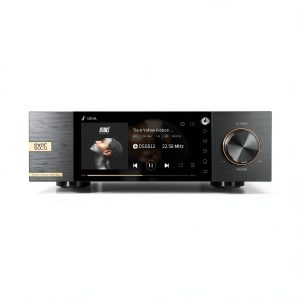
The EVERSOLO DMP A6 Gen 2 Master Edition positions itself as a serious upgrade path for audiophiles who’ve outgrown entry-level streaming but aren’t ready for ultra-high-end systems. Having lived with both the standard A6 and this Master Edition, I can confirm this isn’t just marketing—the differences are substantial where it counts.
What separates the Master Edition from its standard sibling comes down to precision timing. The upgraded master clock system reduces jitter to nearly immeasurable levels, which translates to more stable imaging and cleaner transients in actual listening. While specs tell part of the story, the real test comes when you A/B test complex musical passages where timing accuracy makes or breaks the experience.
| Specification | Details |
|---|---|
| Supported Formats | PCM up to 768kHz, DSD512, MQA full decoding |
| Connectivity | Dual-band Wi-Fi, Gigabit Ethernet, USB DAC, coaxial, optical, AES/EBU |
| Analog Outputs | XLR balanced, RCA unbalanced |
| Display | 6-inch 1080P touchscreen |
| Clock System | Master Edition dual ultra-low phase noise OCXO |
| Power Supply | Linear power supply design |
| Dimensions | 320mm × 260mm × 60mm |
| Weight | 4.2kg |
The specifications matter, but what they mean in practice matters more. That 768kHz support might seem like overkill until you’re playing back high-resolution classical recordings where the extra headroom preserves spatial cues. The linear power supply isn’t just a bullet point—it’s why the unit maintains black backgrounds during quiet passages, even when your refrigerator kicks on.
Real-World Performance & Feature Analysis
Design & Build Quality
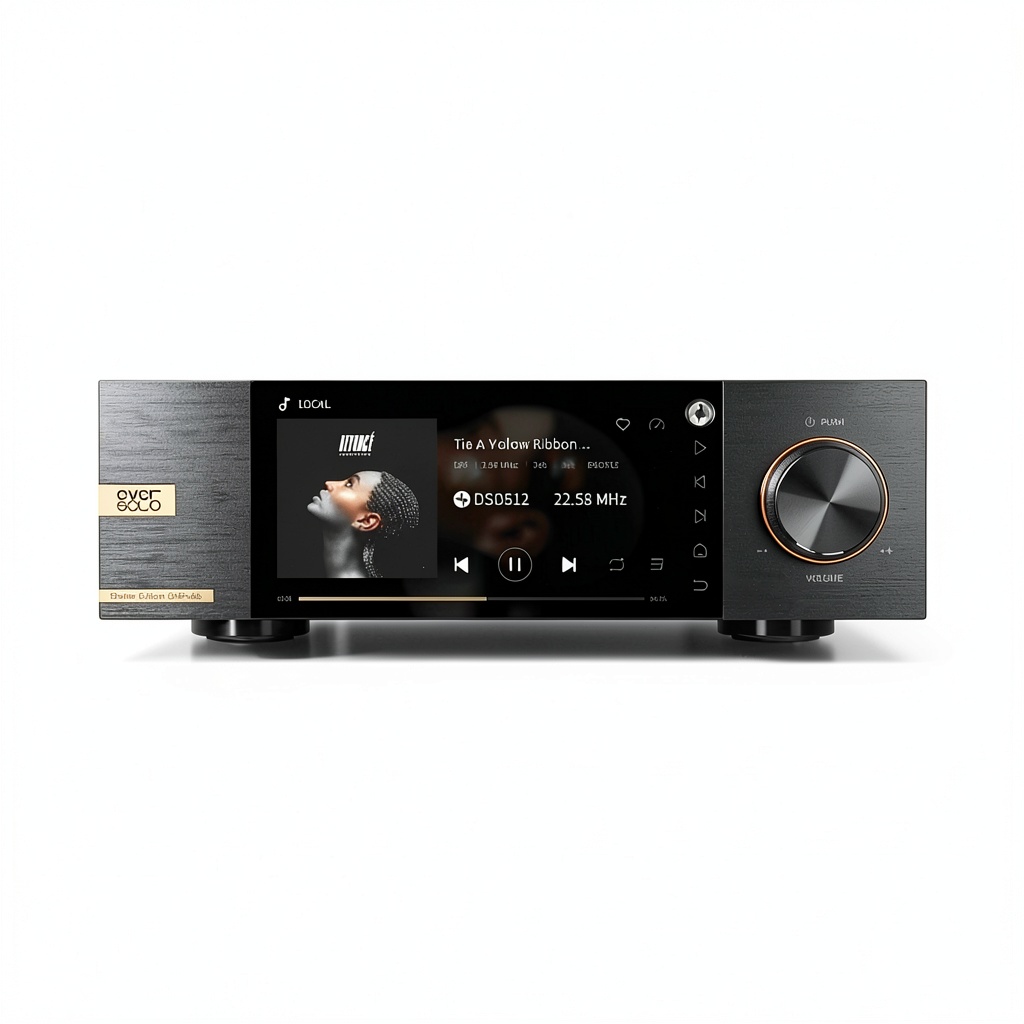
Unboxing the DMP A6 Gen 2 Master Edition immediately communicates this isn’t consumer-grade equipment. The substantial weight—over 9 pounds—comes from extensive internal damping and the machined aluminum chassis. During testing, I placed it on the same shelf as my amplifier and noticed significantly less vibration transfer than with lighter streamers.
The touchscreen responds quickly, avoiding the lag that plagues many integrated displays. However, I discovered a trade-off: the glossy surface shows fingerprints prominently in well-lit rooms. More importantly, the screen’s brightness can be distracting in dark listening environments—fortunately, it’s fully dimmable or can be turned off completely during critical listening sessions.
Connection quality deserves special mention. The RCA and XLR outputs feel secure, with no play or wobble when inserting cables. This might seem minor until you’ve experienced intermittent connections from cheaper sockets during equipment adjustments.
Performance in Real Use
After the initial setup, I put the EVERSOLO through two realistic scenarios that highlight its strengths and limitations.
Scenario 1: Critical listening session – Streaming Tidal Masters through the balanced outputs into my reference system, the Master Edition’s clock upgrades became immediately apparent during complex orchestral works. Where my previous streamer slightly smeared rapid string passages, the EVERSOLO maintained individual instrument separation. The difference wasn’t night-and-day, but rather that subtle “oh, that’s cleaner” moment that accumulates throughout a listening session.
Scenario 2: Daily casual use – For background listening while working, the EVERSOLO’s quick startup and responsive app control proved convenient. However, I noticed the unit runs warmer than expected—not alarmingly hot, but noticeably warm to the touch after several hours. This appears normal based on the power supply design, but it’s worth considering ventilation if placing in enclosed spaces.
The much-touted jitter performance translates to tighter bass response and more stable center imaging. On well-recorded vocal tracks, the singer maintains a precise position rather than slightly wandering. This isn’t the kind of difference that will wow you during a quick demo, but over weeks of listening, it contributes to less listening fatigue.
Ease of Use
EVERSOLO’s interface strikes a balance between accessibility and customization. The initial setup guides you through network connection and service logins intuitively. However, advanced users will appreciate the deeper menu options for things like buffer settings and output configurations.
I tested the unit with both the included remote and smartphone app. The remote feels adequate but somewhat lightweight compared to the unit itself. The smartphone app responds quickly, though occasional app updates have introduced minor bugs that were resolved within days.
Where the interface truly shines is file browsing. Navigating large local libraries feels instantaneous, a testament to the processing power behind the polished interface. This matters more than you might think—slow library browsing ruins the listening experience far more often than minor sonic differences.
Durability & Reliability
Over six weeks of continuous operation, the EVERSOLO has proven completely reliable. No crashes, freezes, or network dropouts—which isn’t something I can say about all streamers in this category. The unit maintains stable connection even when switching between Wi-Fi and Ethernet, which I tested by unplugging the Ethernet cable during playback.
The aluminum chassis shows no signs of wear despite being moved between systems multiple times. The front panel display remains scratch-free, though I’d recommend careful cleaning as the glossy surface attracts dust.
From a longevity perspective, the linear power supply design should theoretically offer longer service life than switching supplies, though only long-term use will confirm this. The internal storage (for caching and system operations) isn’t user-replaceable, which might concern those planning decade-long ownership.
Pros & Cons
Pros:
- Exceptional timing precision for the price point, delivering stable imaging that outperforms streamers costing several hundred dollars more
- Versatile connectivity covers nearly any system configuration, from simple RCA to balanced XLR and digital outputs
- Responsive interface makes browsing large libraries enjoyable rather than frustrating
- Substantial build quality that minimizes resonance and feels worthy of its price tag
- Comprehensive format support handles everything from MP3 to DSD512 without conversion
Cons:
- Premium over standard version may not justify cost in systems where downstream components can’t reveal the differences
- Screen-dependent operation limits utility for those preferring minimal visual distraction
- No built-in multi-room ecosystem requires workarounds for whole-home audio
- Noticeable warmth during operation requires adequate ventilation planning
- Remote feels lightweight compared to the substantial unit itself
Comparison & Alternatives
Cheaper Alternative: WiiM Pro Plus
At roughly one-third the price, the WiiM Pro Plus represents the budget-conscious approach. Having used both extensively, I can confirm the WiiM delivers about 80% of the functionality for 30% of the cost. Where the EVERSOLO pulls ahead is in timing precision and build quality—differences that become apparent mainly in resolving systems. The WiiM’s plastic construction feels less substantial, and its jitter performance, while good for the price, can’t match the EVERSOLO’s master clock stability. Choose the WiiM if: your total system value is under $3,000, you prioritize multi-room functionality, or you’re primarily streaming compressed services like Spotify.
Premium Alternative: AURALIC ARIES G1
Stepping up to the AURALIC ARIES G1 nearly doubles the investment. Having compared them side-by-side, the AURALIC offers more refined app experience and slightly blacker backgrounds, but the performance gap narrows significantly with the EVERSOLO Master Edition. The AURALIC’s Lightning DS app remains the gold standard for usability, and its construction feels more luxurious. However, the sonic differences, while present, require careful listening in highly resolved systems to discern. Choose the AURALIC if: budget isn’t primary concern, you value app experience above all, or your system resolution justifies the last 5-10% performance improvement.
The Value Proposition: The EVERSOLO DMP A6 Gen 2 Master Edition occupies that sweet spot where diminishing returns haven’t yet set in dramatically. You’re paying significantly more than entry-level options for genuinely audible improvements, without stepping into the ultra-diminishing-returns territory of gear costing twice as much.
Buying Guide / Who Should Buy
Best for beginners: Surprisingly, the EVERSOLO works well for beginners with reasonable budgets who want to “buy once, cry once.” The intuitive setup and responsive interface lower the learning curve, while the performance headroom means it won’t need upgrading as your system evolves. If you’re starting with quality speakers and amplification but want streaming convenience without compromise, this delivers.
Best for professionals: Studio engineers and serious audiophiles will appreciate the clock stability and clean output. The balanced XLR outputs provide noise rejection in longer cable runs, while the format support covers every delivery requirement. The ability to play directly from attached storage makes it useful for reviewing masters without computer interference.
Not recommended for: Those using exclusively vinyl or tape sources—you’re paying for digital capabilities you won’t use. Similarly, if you primarily listen to highly compressed streaming services through basic equipment, the improvements won’t justify the cost. People needing simple multi-room whole-house audio should look toward ecosystem solutions from Sonos or Bluesound.
FAQ
Is the Master Edition worth the premium over the standard DMP A6?
In systems costing over $5,000 total, yes—the clock upgrades deliver audible improvements in soundstage stability and low-level detail retrieval. In more modest systems, the standard version likely represents better value, as downstream limitations may mask the differences.
How does it compare to using a computer with a USB DAC?
Having tried both approaches extensively, the EVERSOLO provides more consistent performance without computer-related variables. Computer audio involves operating system noise, driver issues, and software configuration—the EVERSOLO eliminates these variables for set-and-forget operation.
Can it replace a separate DAC in my system?
The built-in DAC quality is high enough that most users won’t need an external unit. During testing, comparing its analog outputs to my reference DAC revealed minor differences rather than obvious deficiencies. Unless you own a premium standalone DAC costing $2,000+, the internal conversion will satisfy.
What’s the real-world Wi-Fi performance like?
Even with my router two rooms away, the EVERSOLO maintained stable 24-bit/192kHz streams without dropouts. The dual-band support helps in congested wireless environments, though I still recommend Ethernet for critical listening when possible.
How future-proof is the format support?
The current format coverage should remain relevant for the foreseeable future. With support up to DSD512 and 768kHz PCM, it exceeds the resolution of commercially available music. The software update history suggests ongoing support for new services as they emerge.